
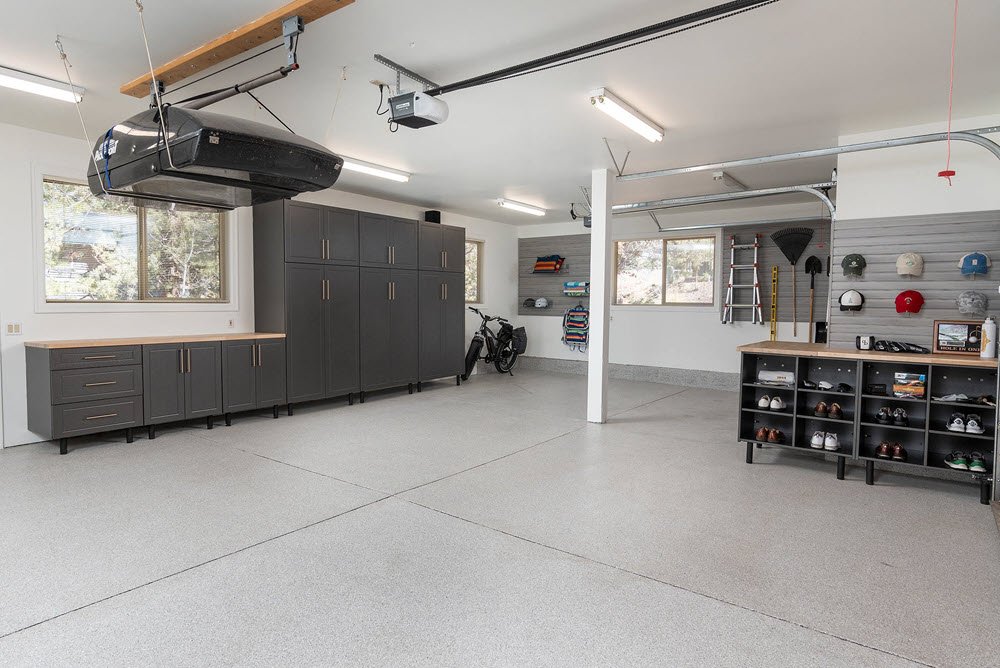
So, You’re Thinking About Epoxy Flooring
Here are the key factors to evaluate when choosing epoxy flooring for a garage — basically, the things that determine whether the floor will last, perform well, and suit your needs.
What Matters When Evaluating Garage Epoxy Flooring
Durability & load-/impact resistance
Good epoxy flooring must resist heavy loads (cars, equipment, storage), impacts (dropped tools), and abrasion from traffic or movement.
The thickness of the epoxy layer makes a difference: thicker coatings generally deliver better strength and longevity.
A well-applied coating will outperform plain concrete or simple floor paint — less cracking, chipping or wear over time.
Chemical, stain, and moisture resistance
Garages often involve oil, gasoline, antifreeze, chemicals, cleaning solvents, and sometimes moisture or water — a good epoxy floor should resist chemicals, oils, stains, and water.
The non-porous, sealed surface of epoxy helps protect the underlying concrete and makes cleanup easier.
Surface appearance, finish type & aesthetics
Epoxy coatings come in various finishes and styles: smooth high-gloss, colored, flake, decorative — which can dramatically improve how the garage looks.
If you care about a “clean/good-looking” garage (e.g. showroom-style, workshop space, etc.), this customization can matter a lot.
Slip resistance / safety
Because epoxy can be smooth and glossy, it may get slippery when wet or oily — especially in a garage where fluids might spill.
Many epoxy systems allow anti-slip additives or textured finishes (e.g. grit, flakes, aggregate) to improve traction — an important safety consideration if people walk on the floor or you’re working in the garage.
Ease of maintenance & cleaning
A big benefit: well-done epoxy floors are easy to clean — sweeping or mopping is usually enough, and spills (oil, chemicals) are easier to wipe up compared to bare concrete.
Because of their sealed, non-porous surface — they also resist stains and moisture infiltration.
Quality of substrate preparation & installation
Proper prep of the underlying concrete is essential: the floor must be clean, dry, free of grease/contamination, and any cracks or pits repaired so the epoxy bonds well.
The curing process matters: epoxy needs adequate dry/curing time before the floor is used to ensure full hardening and adhesion.
In many cases — especially for higher-performance or industrial-grade coatings — professional application is recommended.
Longevity, life cycle, and cost-to-benefit balance
A well-installed epoxy garage floor can last many years — often a decade or two — with regular use and maintenance.
Though initial cost and installation complexity are higher than simple concrete paint, the long-term durability, protection, and reduced maintenance often make epoxy a cost-effective solution over time.
Additional Considerations Based on Use-Case
If you use the garage for vehicles and heavy loads: prioritize thickness, impact/abrasion resistance, chemical resistance, and adhesion.
If the garage doubles as a workshop or storage space: emphasize durability, chemical/moisture protection, and ease of cleaning.
If appearance matters (showroom-style, finished garage, home gym, hobby space): pay attention to finish type, color/flake options, gloss, and smoothness.
If safety is important (wet floor, oil spills, foot traffic): consider slip-resistant finishes or anti-slip additives.